
Get Ahead in 2025! Save 35% on Link Building Services – Limited Time Offer!
Get Ahead in 2025! Save 35% on Link Building Services – Limited Time Offer!
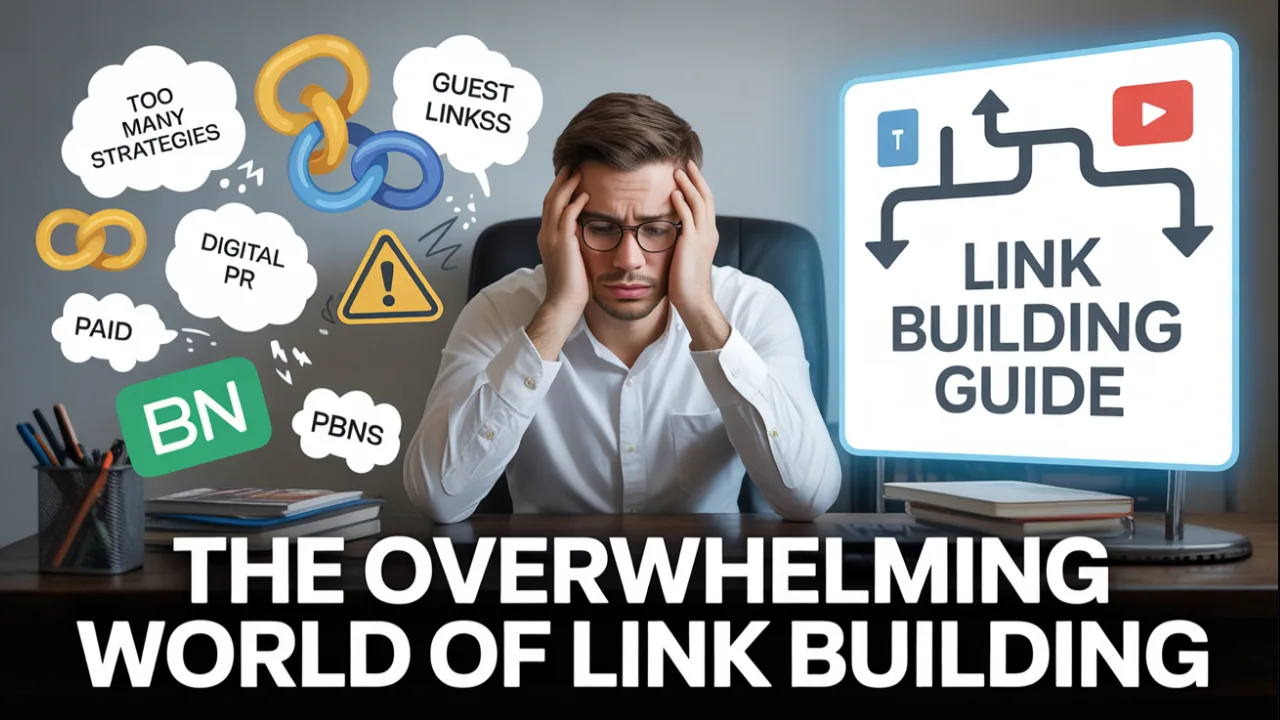
You’re drowning in SEO advice. One expert claims guest posting is dead, another insists it’s the only real strategy left. You see competitors ranking with tactics that Google supposedly dislikes, yet your own site refuses to move.
It’s frustrating. You’ve tried guest posting with zero results. You’ve spent hours on broken link building without anything to show for it. At this point, you might be questioning whether link building is even worth the effort—or if it’s just an overhyped concept used to sell expensive courses.
It is worth it. The problem is the overwhelming noise surrounding it. This guide cuts through that noise and lays out the most complete link building roadmap you’ll find online. From the most sustainable white-hat methods to the riskiest black-hat strategies, this guide reveals every category so you can choose exactly what aligns with your goals.
By the end, you’ll have a complete map of the link building universe.
My name is M Awais, and I’ve spent more than a decade working deep in the SEO world. I’ve built link building campaigns for small local shops and Fortune 500 companies alike. I’ve seen what works, what fails, and what gets websites penalized. There’s no magic shortcut here—only strategies refined through real experience.
This guide is structured in four parts:
White-Hat Link Building – the safest, most sustainable strategies.
Digital PR – modern, highly scalable link earning.
Grey-Hat Link Building – tactics that work but come with risks.
Black-Hat Link Building – strategies you must understand, but avoid.
Let’s dive in.
White-hat link building focuses on earning backlinks through ethical methods that provide genuine value. This is the equivalent of building on solid bedrock—slower to construct, but stable enough to survive any Google algorithm update.
The core principle: create value that naturally earns links.
Below are the most effective white-hat strategies.
Guest posting is not dead. In 2025, it remains extremely powerful—when done correctly.
Outdated guest posting strategies involving low-quality blogs and “write for us” pages no longer work. Modern guest posting is about quality, relevance, and authentic relationships.
Don’t focus solely on metrics like DA. Instead, ask:
Does the site have a real audience?
Is the content high quality?
Is it relevant to your niche?
Would you proudly show this link to your boss or client?
Sometimes, a smaller, highly relevant site is far more valuable than a large generic one.
Use search queries like:
“Your Topic + write for us”
“Your Topic + contribute”
Or analyze competitor backlinks using tools like Ahrefs.
Don’t appear as a stranger asking for favors.
Engage with editors on social platforms, comment on their articles, or share their content. When you finally pitch, you’ll be recognized as someone who has already contributed value.
Use the editor’s name. Reference a specific article you liked. Provide a few targeted content ideas tailored to their audience.
Do not submit low-quality or outsourced work.
Create something:
In-depth
Well-researched
Truly helpful
A contextual link inside the article is ideal and carries more value than a bio link.
Done right, guest posting boosts authority, drives targeted traffic, and increases brand exposure.
Broken link building is still one of the best win-win link strategies. It involves replacing dead links on other websites with your relevant resource.
Search for:
“Your topic + resource page”
“Your topic + helpful links”
“Your topic inurl:links”
Use tools like Check My Links to quickly identify dead outbound links.
Use the Wayback Machine (archive.org) to view the old content. This ensures you know exactly what resource the site originally valued.
Either improve an existing article or create a new, updated, and more valuable resource.
Keep it simple:
Notify the site owner about the broken link, then suggest your resource as a replacement.
Everyone benefits: they fix their page, and you gain a quality backlink.
Popularized by Brian Dean, this method remains extremely effective.
Find popular content in your niche
Use Ahrefs Content Explorer to locate articles with many backlinks.
Create something dramatically better
Your new asset can be:
Longer and more detailed
More visually appealing
More up-to-date
More comprehensive
Reach out to everyone who linked to the original
Explain that you created a superior version and why it’s more valuable.
Not everyone will swap their link, but those who do will be extremely relevant and authoritative.
Digital PR is currently one of the strongest ways to earn high-authority editorial backlinks. Instead of asking for links, you create newsworthy stories that naturally attract attention from top-tier publications.
Google loves these links because they come from trusted news sources.
Journalists rely heavily on data. When you produce original research, you become a source worth citing.
Ideation: Choose timely, relevant topics with clear news angles.
Data Collection: Use surveys or public datasets.
Create the Asset: Turn your findings into a polished report or infographic.
Pitch to Journalists: Highlight the most surprising or attention-grabbing statistic.
Targeted Outreach: Pitch only to journalists covering your topic area.
A successful data-driven campaign can earn dozens—or even hundreds—of authoritative links.
This involves inserting your expert insights into a trending story.
Monitor real-time trends through Google Trends or X/Twitter
Provide quick expert commentary
Use platforms like HARO, Qwoted, or Featured.com
Contact journalists directly if they’re covering a story relevant to your expertise
Speed and relevance are key to success.
Grey-hat strategies are not strictly forbidden, but they contradict Google’s intent. They may produce fast results, but they come with real risks.
Proceed carefully.
Buying links violates Google’s guidelines, yet it remains common in the SEO world.
Paid Guest Posts: Paying for publication.
Niche Edits: Paying to insert your link into an existing article.
Typical costs range from $370–$500 per link.
Google’s SpamBrain can detect unnatural patterns
Bought links may be devalued
Worst case: manual penalty and ranking collapse
Reciprocal linking (“you link to me, I link to you”) is acceptable only in moderation.
At scale, it becomes an obvious manipulation tactic.
They can work—often quickly—but they are unstable and risky. For established businesses or long-term projects, these shortcuts can create long-term damage.
Black-hat methods deliberately violate search engine rules. They exploit weaknesses for short-lived gains and almost always lead to penalties.
These are explained purely for awareness, not for implementation.
A PBN is a network of controlled sites used to boost a primary “money site.”
Purchase expired domains with existing authority
Build simple sites on them
Use them to link to your main site
Google aggressively targets PBNs with penalties and de-indexing. The risk is extremely high.
Automated spam comments containing backlinks are nearly worthless today:
They are usually nofollow
They harm brand reputation
Google ignores or penalizes them
Tools that generate thousands of low-quality links create a toxic backlink profile.
These strategies no longer work and often trigger penalties.
Now that you understand every type of link building, the next step is building a strategy tailored to your situation.
Focus on foundational white-hat strategies and strong content.
You can pursue Digital PR and advanced guest posting.
Professional industries require trust-focused links.
Aggressive niches often involve more grey-hat tactics.
A natural link profile is diverse:
70% White-Hat: guest posts, resources
20% Digital PR: high-impact campaigns
10% Opportunistic Wins: broken links, expert roundups, HARO responses
Avoid over-optimizing anchor text. A natural mix includes:
Branded anchors
Naked URLs
Generic anchors (“click here”)
Partial-match anchors
Rare exact-match anchors
Measure long-term growth through:
Referring domains
Domain quality
Organic traffic
Keyword movements
White-hat methods build long-lasting authority. Digital PR can deliver explosive growth. Grey-hat tactics offer shortcuts but carry risks. Black-hat strategies may provide quick wins but almost always end in penalties.
The core principle for 2025 and beyond is simple:
Google rewards authority and trust.
Every link building decision should aim to demonstrate both.
If you’d like to explore more strategies, consider reading further resources on outreach, content development, and sustainable SEO growth.
 PeakRankAgency